
News
What determines the quality of frozen passion fruit juice?
13
Oct
Oct
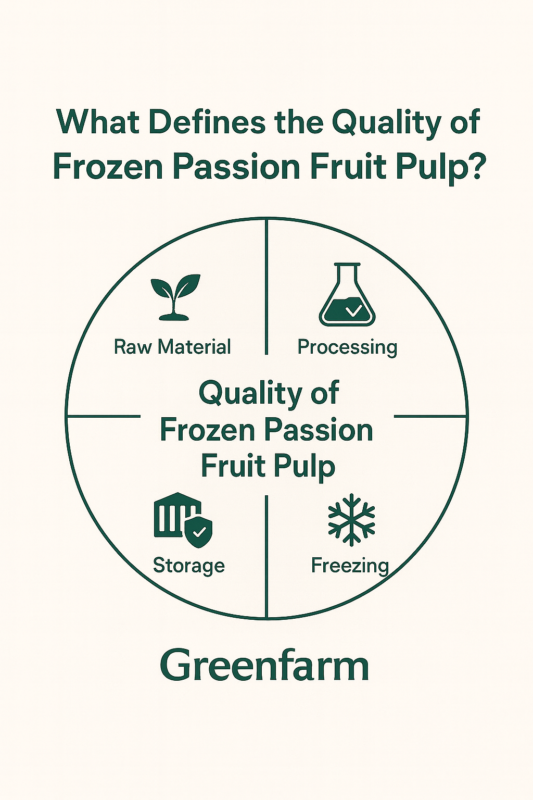
1. Input Material Quality: Passion fruit variety: The passion fruit variety (e.g., purple passion fruit) directly affects the flavor, color, and nutritional value of the pulp product. Harvest ripeness: Passion fruit needs to be harvested at the appropriate ripeness (e.g., the peel turns purple on more than 50% of the surface) to ensure the best flavor and quality. Fruit condition: The fruit must be uniform in size and color, free from bruises, scratches, or diseases, to avoid affecting quality and food safety. 2. Processing Procedure: Hygiene: Ensure hygienic conditions throughout the production process to prevent bacterial contamination. Heat treatment (if any): Heat stabilization helps limit unwanted biochemical reactions that can reduce product quality. Freezing process: Applying quick freezing (IQF) technology helps retain the maximum natural characteristics of passion fruit such as flavor, color, and nutritional value. 3. Product Quality Criteria After Thawing After thawing, high-quality frozen passion fruit purée needs to meet certain standards, usually stipulated in national standards (e.g., TCVN 13941:2023): Soluble solids content (Brix): Usually not lower than 13.51 tbsp by weight for regular passion fruit purée. pH: Ranges from 2.3 to 3.5. Acid content (converted to citric acid): Usually from 2.5 to 5.01 tbsp by weight. Sensory criteria: Characteristic color, smell, taste, and absence of foreign matter. Microbiological criteria: Ensuring food safety. 4. Storage and Transportation Conditions Storage temperature: Frozen passion fruit juice needs to be stored at an appropriate temperature (usually below -18°C) to maintain quality over a long period. Transportation: Transport vehicles must be clean, free of strange odors, and maintain a stable temperature; Avoid transporting these items together with goods that may cause odor contamination or affect product quality.
